
Could Lady Whistledown Survive Today? Defamation, Libel, and Media Law Beyond the World of Bridgerton

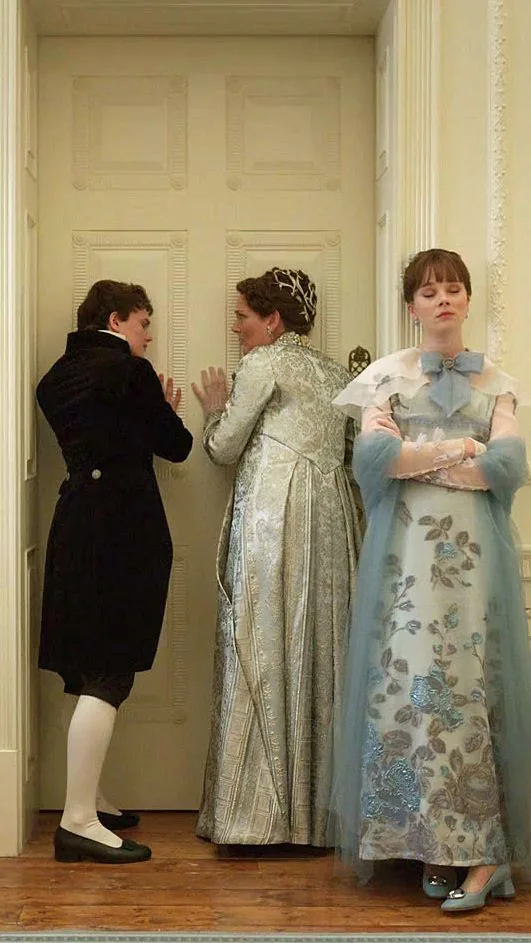
Dearest gentle reader, if there is one thing the ton loves more than a scandalous waltz, it is the devastating ink of a craftily timed publication. For the uninitiated, I must take the liberty of introducing Lady Whistledown, the anonymous, well, for most part of it, omniscient gossip columnist at the heart of the hit Netflix series Bridgerton. Set against the opulent backdrop of Regency-era London, 1811 to 1820, the columnist’s widely circulated newsletters act as both the judge of pompous affairs and the executioner of high society’s most guarded secrets, wielding enough power to dictate the rise and fall of dukes, debutantes, and even the Queen herself. We have all watched, or at least heard of, how a single sheet of paper can take a person’s reputation by storm. But let us pull our eyes away from the glittering ballrooms of that era and cast them toward the glaring screens of 2026. What happens if this infamous author were to drop their scandalous broadsheets into our modern sphere? This offers an interesting lens through which to examine the sharp, unyielding edges of modern media law. Today, the power of the press stands democratised. Anyone with a smartphone and an internet connection can play at being the anonymous informant. Because of this, understanding the boundary between harmless tea-spilling and legally vulnerable publication is more critical than ever. This article explores that very line, dissecting the reality of what would constitute privacy violations and slander for those whose private lives turn into public entertainment, by unpacking the evolution of defamation, the strict parameters and development of the concept of privacy, and how the true scandal today would not be a marriage proposal being turned down, but rather how it is followed by an absolute avalanche of cease-and-desist letters and multi-million-dollar lawsuits headed straight for a modern-day Whistledown’s door.
The English Law’s Long War With Gossip
To understand the sheer magnitude of legal peril our dearest author would face today, one must first look backward at how English courts historically handled the issue. Did you know that in the early days of English common law, specifically under the infamous Star Chamber of the 17th century, telling the truth could actually get you into more trouble? Established in cases like De Libellis Famosis, the legal scholars of the era operated on a rather bewildering maxim, “the greater the truth, the greater the libel.” A true scandalous statement was far more likely to provoke a violent duel, unrest, even rebellion, or a breach of the King’s peace than a fabricated one. Libel, particularly written, was therefore punished with severity and, strikingly, truth was no defence. With the introduction of printing technology and the rise of pamphleteering, the law was pushed into maturing. The Fox's Libel Act 1792 finally gave juries, rather than just judges, the ultimate authority to decide the question of libel. Then came the game changer, the Libel Act 1843, which formally allowed publishers to use truth as a defence, provided it was for the “public benefit.”

The intellectual grounding continued to crystallise through the Defamation Act 1952 and later the Defamation Act 1996, which refined procedural safeguards, but the modern threshold is firmly anchored in the Defamation Act 2013. Section 1 fundamentally raised the bar through the introduction of “serious harm,” recalibrating the balance so that trivial reputational claims would no longer suffice. Alongside this, defences such as truth, honest opinion, and publication on matters of public interest were codified, offering protection to legitimate journalism while narrowing the space for reckless gossip. Parallelly, privacy law was once again taken up as a serious concern, gaining force through the Human Rights Act 1998, embedding Article 8 of the European Convention on Human Rights, the right to respect for private and family life, in constant tension with Article 10, freedom of expression. This tension was judicially sculpted into the modern tort of misuse of private information, with cases such as Campbell v MGN Ltd signalling a decisive shift in its stated nature. Now place this architecture within the hyper-circuitry of modern technology. Today, the press, with pervasive social media access, stands largely decentralised, algorithmically amplified, and often anonymous. Hollywood gossip portals, blind-item Instagram accounts, speculative TikTok narratives, they capitalise on the same behavioural economy that once sustained Lady Whistledown, but at a scale previously unimaginable. This scale, as overwhelming as it is, is being addressed, at least in part, by the Online Safety Act 2023, imposing duties on platforms to mitigate harmful content and signalling a shift from individual liability to systemic accountability. Yet enforcement remains uneven, particularly when gossip is framed as opinion or coded insinuation. At the same time, artificial intelligence has introduced a new layer of complexity, deepfakes, synthetic narratives, and AI-generated gossip. Attribution becomes difficult when the algorithm is the amplifier, liability becomes diffused, and the speed of dissemination far outpaces available remedies. The law safeguards through thresholds, defences, and platform duties, but what it lacks is anticipatory design.
India, Gossip and the Business of Reputation in a Data Economy
Nearly the same legal principles exist in India, yet what concurrently lacks is anticipatory design. Following the trajectory of this legal journey, if our scandalous scribe were to set up shop in Mumbai or Delhi today, she would crash headfirst into the Bharatiya Nyaya Sanhita, 2023. Under Section 356, the provision of criminal defamation expresses how the liability can extends beyond civil fines in India. This position was firmly upheld in Subramanian Swamy v. Union of India, where the Court affirmed that the right to freedom of speech does not eclipse the right to reputation. This framework is further deepened by the constitutional elevation of privacy in Justice K.S. Puttaswamy v. Union of India, transforming personal autonomy into a protected legal interest. And now, the regulatory horizon expands with the Digital Personal Data Protection Act, 2023, which reclassifies modern gossip not merely as speech, but as data processing, bringing with it obligations of consent, purpose limitation, and accountability. India, therefore, does not lack law. It lacks the pre-emptive structuring of digital behaviour. Gossip pages, influencer leaks, and anonymous brand call-outs continue to operate within a grey zone, exploiting the edges of speed, virality, and ambiguity, now further glamorised and accelerated by artificial intelligence integration.

Reputation Is Strategy, What Founders Must Understand Before the Narrative Turns on Them
For brands and founders whose ambition is to grow their brands by riding trend waves in the most savvy manner, these lessons are essential to be imbibed. First, the Streisand Effect is real. Reputation is the most fragile thing anyone can own. Strategically plan your marketing ambitions to stay clear of tarnishing yours or someone else’s, because litigation is a double-edged sword. Secondly, transparency defeats whispers. Gossip thrives in the dark, and brands that proactively address PR crises, own their missteps, and communicate with authenticity are far less susceptible to poisoning their own ecosystem. Third, rely on the letter of the law and be reliable for law enforcement. From following the measures under the Digital Personal Data Protection Act, 2023 to consumer protection laws, know your rights under contracts and torts as well. In the digital age, everyone holds a quill. To survive this modern ton, founders must act not with hubris, but with calculated foresight, ensuring their own houses are perfectly in order before the next digital pamphlet drops.
Sources
Primary Legal Sources (UK) Defamation Act 2013 Defamation Act 1996 Defamation Act 1952 Libel Act 1843 Fox's Libel Act 1792 Human Rights Act 1998 Online Safety Act 2023 Primary Legal Sources (India) Bharatiya Nyaya Sanhita, 2023 (Section 356 – Criminal Defamation) Digital Personal Data Protection Act, 2023 Indian Penal Code, 1860 (Sections 499–500 – Defamation) Landmark Case Laws De Libellis Famosis Campbell v MGN Ltd New York Times Co. v. Sullivan Subramanian Swamy v. Union of India Justice K.S. Puttaswamy v. Union of India Scholarly Works & Foundational Texts The Right to Privacy, Harvard Law Review Prosser, William L., Privacy, California Law Review Barendt, Eric, Freedom of Speech, Oxford University Press Mark Lunney & Ken Oliphant, Tort Law: Text and Materials Reports, Commentary & Modern Analysis UK Law Commission Reports on Defamation Reform Information Commissioner’s Office (ICO), UK – Guidance on Data Protection and Privacy Ministry of Electronics and Information Technology (MeitY), India – DPDP Act Framework Notes European Court of Human Rights Jurisprudence on Article 8 vs Article 10 Cultural & Media References Bridgerton Contemporary analysis of digital gossip ecosystems, including Hollywood tabloids, blind-item culture, and social media commentary platforms

Vanshika Verma
Founder & Editor-in-Chief
Vanshika Verma founded Strategist’s Cut to explore the intersection of fashion, law, and capital. Drawing from research training and experience inside a fashion brand, her work examines how influence, markets, and cultural power are structured. With a background in legal analysis, market research, and digital media, she approaches publishing as a way to decode the systems shaping fashion, luxury, and business.