
Why Do Luxury Brands Make Beauty Products?
Think couture. One thing that cannot go unnoticed is how everyone around you, from your Instagram feed, particularly creators who dissect every collection, to tweets and conversations over coffee, is obsessed with talking about luxury brands with a hint of artification, the reverence and the feeling that comes with it. The similarity is deafening if you think about it, from the scenes of Breakfast at Tiffany's to Confessions of a Shopaholic. You stand before it, you study it with your eyes and hands, and then you feel something shift within you. You love to immerse yourself in the craftsmanship, the audacity of its niche design, and the way it pulls you in. And then, just as quickly, it pushes you out. The price sits there, immovable, not very immersion-worthy, a quiet reminder that this world might not be designed for everyday, carry-on-your-shoulder comfort. You can admire it, you can desire it, but belonging to it, consistently and intimately, has to be a decision, a commitment. And brands have sensed that. So now there is also a second, more practical rupture. Even if you do make that decision and that commitment to couture, what then? You still cannot practically wear couture to your 9 AM lecture, your office, or your routine strolls. The innate meaning of couture is to be different, fresh for the eyes, not built for repetition. The emotional high is real, but it is not sustainable. And in figuring out how to cross this gap, of everyday presence, of consistent sales, and of loyalty among all those who perceive the brand, luxury brands had to take a very real step.
How Beauty Keeps Luxury Brands Relevant Every Day

The simple logic of staying in business involves either selling the extremely rare while maintaining a brand image that keeps you constantly relevant, or shaping the brand’s future so it moves from spectacle to habit, from something you visit or scroll to something you carry. So the very concept of luxury brands moving into beauty goes beyond a simple product extension. It is anything but simple. The ingredients of this complex concoction are how they secure attention, loyalty, and cultural presence, becoming the it-girl or it-guy cultural systems. And beauty becomes the most efficient way of scaling that vision without collapsing the brand’s mythology, ensuring that the luxury appeal remains aspirational while becoming accessible in fragments. Think of it like this: you may not wear a Schiaparelli gown every day, but you will apply the perfume, you will reapply the lipstick, and you will carry that accessible compact of Chanel in your bag, even if your plans of owning a classic Chanel are to be made a reality a little later. This ensures rituals of presence and captures space in your life and behaviour. They are small but repeated. And with such repetition, the brand becomes part of your daily life. The same logic has already begun to play out closer home. Manish Malhotra and Sabyasachi Mukherjee have both stepped into beauty, translating their signature aesthetics into products that extend their worlds beyond couture. Masaba Gupta's label has also leaned into this space in a more playful, culture-forward manner. And for brands as niche and architecturally driven as Gaurav Gupta or Amit Aggarwal, the expectation would be the same: that whenever they enter beauty, they will not just sell products, but translate their design language into something you can carry, use, and repeat. The second layer is that the product travels. You take it out in public, you use it in shared spaces, and someone notices. Someone asks, “What are you wearing?" The answer becomes a product name, a brand that now has the power to exist in those conversations. This is how luxury circulation is now architected, beyond runways and campaigns; it moves through everyday gestures.

Why a Brand like Schiaparelli's Beauty Positioning is Expected to Be Different
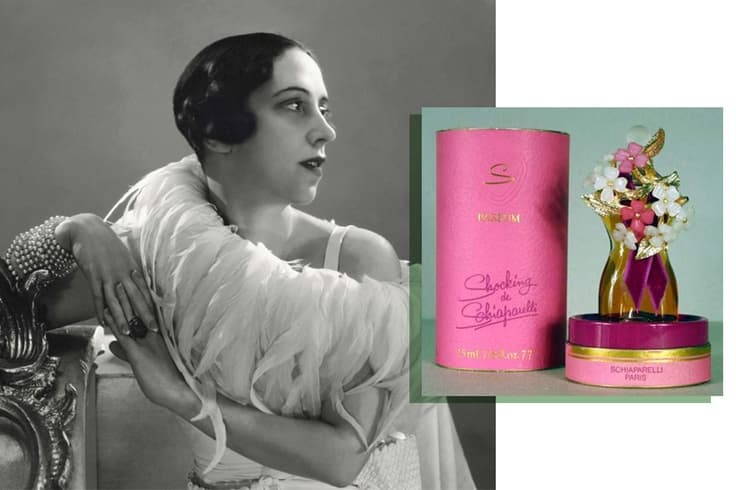
Schiaparelli becomes a case to watch within this expansion renaissance. It is important because the house was never built on quiet luxury. It was built to disrupt, to bring out the surrealism that exists within, and to make the familiar feel slightly unreal. In 1937, Elsa Schiaparelli launched Shocking. And naturally, it came forward as a statement, dressed in a bottle shaped like a woman's torso. The colour was “shocking pink”, designed to stun, a provocation, forcing attention in a room filled with conventionally shaped bottles. Now, with the reins handed to Daniel Roseberry, formerly at Thom Browne and, since 2019, leading the creative direction of Schiaparelli, the brand positions him as someone who pushes the boundaries of what couture can be, while paying due homage to Elsa Schiaparelli’s vision of constant technical innovation rooted in surrealism. The translation of this larger luxury shift has only intensified. You have to understand the equation: the more wearable pieces move closer to art installations, the more distant they become from everyday life. It becomes a visual theatre. The spectacle grows, but at the cost of accessibility shrinking. So if a lipstick has to be made within Schiaparelli’s codes, it cannot simply be sold under the tag of luxury. Even if it is, it would risk losing Elsa’s essence. It has to carry the air that the house has survived on for decades. A shocking pink that truly shocks with its stark brightness. A gold casing that delivers a regal, almost sculptural appeal. A fragrance that feels less like a product and more like an experience of being within the brand’s culture. And if we are to imagine a lipstick or any cosmetic line tomorrow, it has to be vivacious in the most eye-catching sense. Bold casing. Brand elements are present in a subtle yet sensational manner. That is how it becomes Schiaparelli.

What to Watch Out for as Luxury Moves Into Beauty
What to watch for is how these ideations are actually executed. If Schiaparelli comes out with a generic extension, it risks becoming just one of many brands that have entered the space and captured shelves. Mere gold packaging, elevated pricing, and little else would not deliver the feeling of being part of the Schiaparelli world. The strength of the brand lies in its specificity, its refusal to be subtle, and its willingness to be excessive. If that is preserved, it works. If not, it flattens. Another important aspect to be wary of is the underlying legal and structural layer the brand cements if it moves into this space. Schiaparelli's visual codes are highly distinctive: anatomical motifs, surreal distortions, and signature colours. These are assets the brand has built and maintained, but like any form of capital, they must also be protected from vulnerability. The moment they enter the beauty market, they become easier to replicate and diffuse more quickly. And very practically, the question is not whether they will be copied; it is how tightly the brand controls its identity through design protection, trademarks, and a consistent visual language, supported by proactive monitoring. This is not limited to European couture. The same tension is already visible within Indian luxury. As Manish Malhotra, Sabyasachi Mukherjee, and Masaba Gupta move into beauty, and as more structurally driven labels like Gaurav Gupta or Amit Aggarwal eventually enter, the expectation is not expansion for the sake of it. It is translation without dilution. If their codes do not carry through, if the product does not hold the same design language, then the extension exists, but the brand does not. Alongside this, what we also begin to expect is a sharper attention to how these products are named, positioned, and communicated. The branding, the product lines, the language around ingredients, all of it begins to matter just as much as the design itself. The formulation cannot feel like an afterthought. It must signal safety, elegance, and a distinct point of view. It must stand out without collapsing into noise. Because in a market saturated with claims and copy, what survives is not just what looks different, but what feels considered. The concluding note here is simple. Luxury is not becoming accessible in the traditional sense. It is becoming present, in small fragments, in your purse, on your vanity, and on your feed. And for houses built on the finesse of avant-garde expression, the expectation is clear. Their language should not stop at the runway. It will move into your everyday objects, your behaviour, and how you feel. And it should. But only if the essence travels with it. Otherwise, what is actually being extended?

Vanshika Verma
Founder & Editor-in-Chief
Vanshika Verma founded Strategist’s Cut to explore the intersection of fashion, law, and capital. Drawing from research training and experience inside a fashion brand, her work examines how influence, markets, and cultural power are structured. With a background in legal analysis, market research, and digital media, she approaches publishing as a way to decode the systems shaping fashion, luxury, and business.